

Bhutan
The Last Shangri-La, focused on Gross National Happiness.
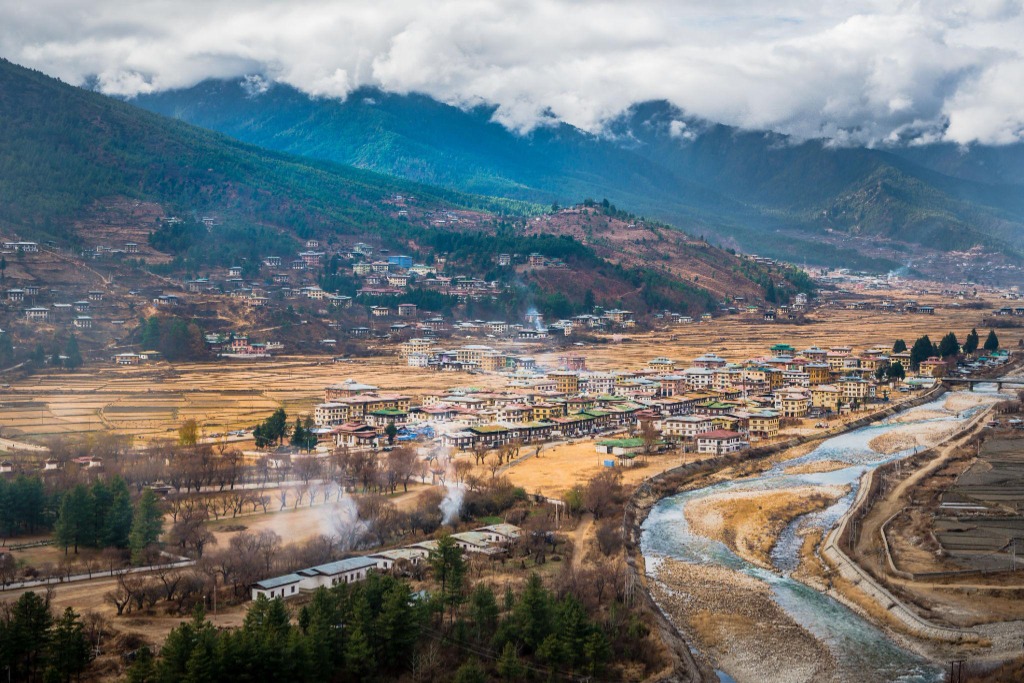
Paro – Gateway to Bhutan and Spiritual Foundation
Paro is located in western Bhutan and serves as the country’s primary international gateway. All international flights land at Paro International Airport, which itself is considered one of the most scenic and technically challenging airports in the world due to the surrounding mountains. The Paro Valley is known for its pristine environment, traditional farmhouses, rivers, and sacred religious sites. The town reflects Bhutan’s commitment to preserving tradition while welcoming mindful tourism. Historical landmarks such as Rinpung Dzong, which once served as a defensive fortress and now functions as a monastic and administrative center, highlight Bhutanese architecture and craftsmanship. Nearby, Ta Dzong, originally built as a watchtower, houses the National Museum and preserves centuries of Bhutanese history, art, and artifacts. Paro sets the spiritual and cultural tone for the journey, offering visitors their first deep connection with Bhutanese values, religion, and way of life.
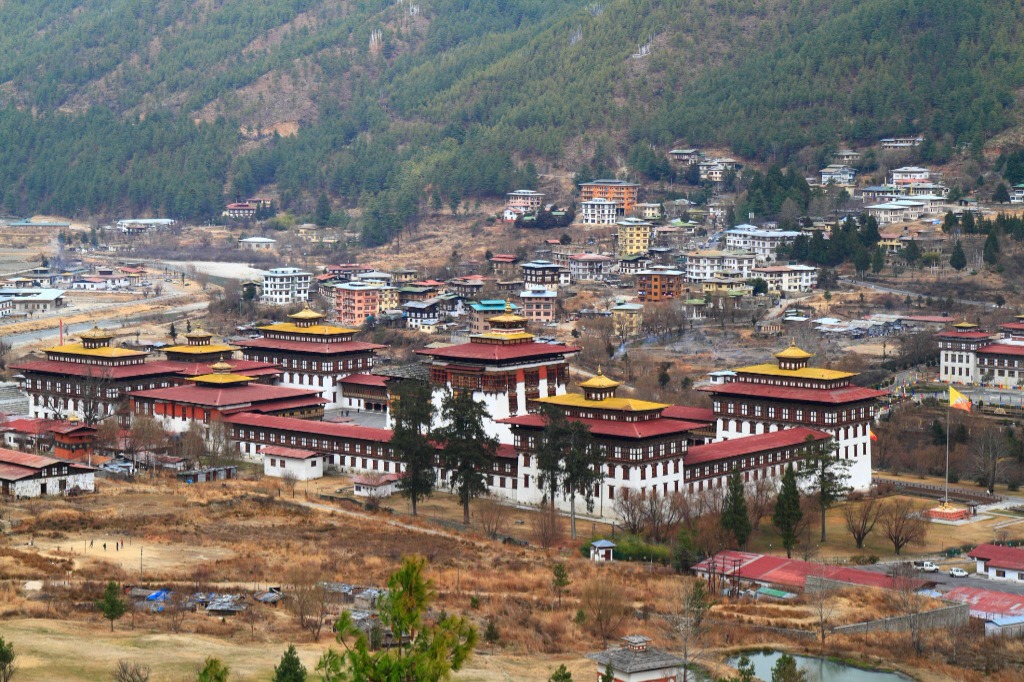
Thimphu – Capital City and Cultural Core
Thimphu lies about 54 kilometers east of Paro and is the political, cultural, and economic center of Bhutan. Unlike most capital cities, Thimphu maintains a calm and traditional atmosphere, with strict building regulations that preserve Bhutanese architectural identity. The city is home to important spiritual and administrative landmarks. The King’s Memorial Chorten is a major religious structure where locals gather daily to pray, meditate, and perform ritual circumambulations. Tashichho Dzong, a massive fortress complex, houses Bhutan’s throne room, government offices, and the central monastic body, symbolizing the unity of religion and governance in Bhutan. Thimphu also offers insight into everyday Bhutanese life through its local markets, textile traditions, and cultural institutions. Visitors gain an understanding of Bhutan’s philosophy of Gross National Happiness, which prioritizes cultural preservation, environmental sustainability, and spiritual well-being over material growth.
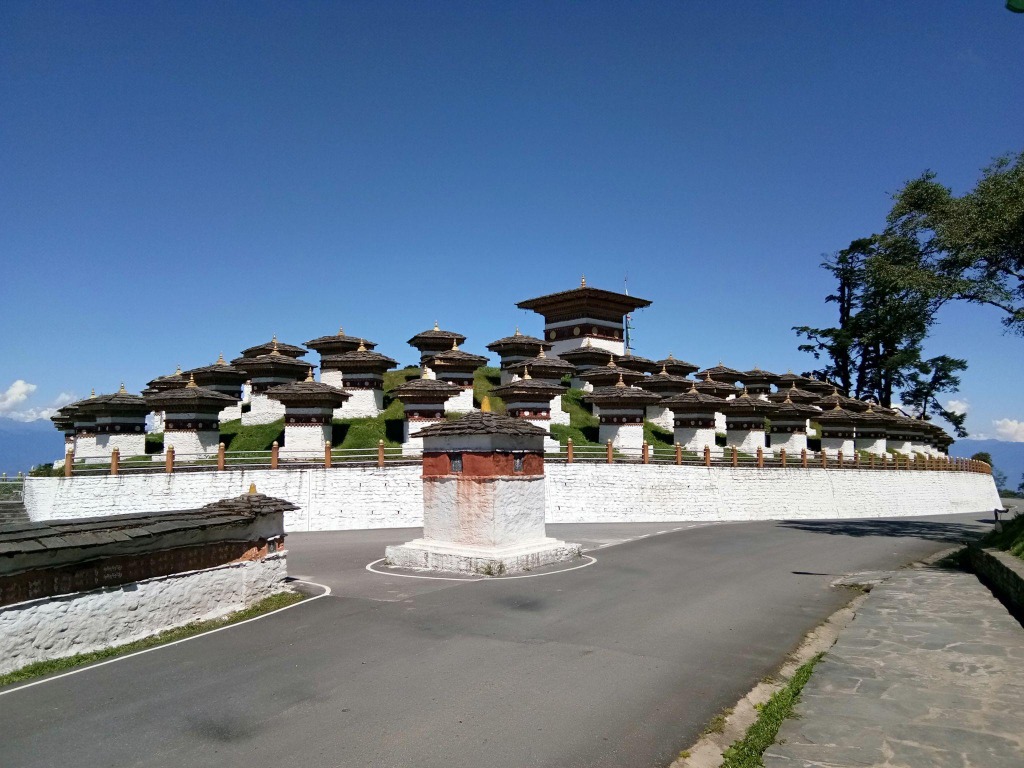
Dochula Pass – Gateway Between Regions
Dochula Pass connects Thimphu with Punakha and stands at an elevation of approximately 3,100 meters above sea level. The drive through this pass marks a transition from the cooler highlands to the warmer valleys of central Bhutan. The pass is renowned for the 108 Druk Wangyal Chortens, built to commemorate peace and honor Bhutanese soldiers. On clear days, Dochula Pass offers panoramic views of the eastern Himalayan mountain range, making it one of the most visually striking points of the journey. Beyond its scenic beauty, Dochula Pass represents Bhutan’s deep spiritual symbolism and respect for harmony, peace, and remembrance.
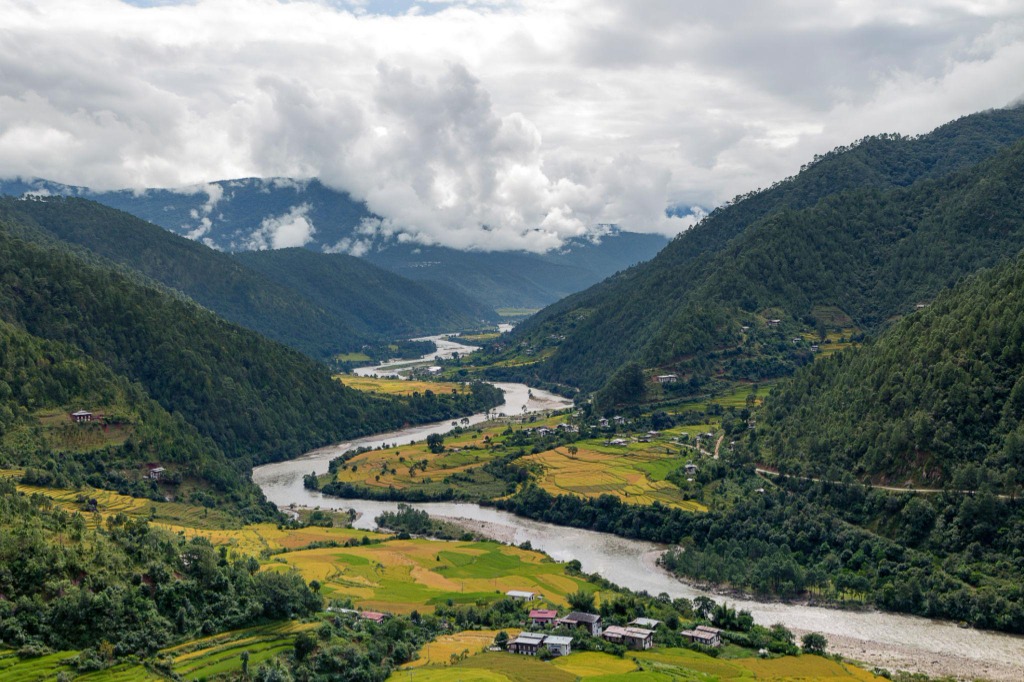
Punakha – Former Capital and Valley of Fertility
Punakha is situated in central-western Bhutan and served as the country’s capital until 1955. Due to its lower elevation, Punakha enjoys a milder climate, fertile land, and lush agricultural landscapes, making it an important farming region. The centerpiece of Punakha is Punakha Dzong, located at the confluence of the Pho Chhu (Male River) and Mo Chhu (Female River). This dzong is not only an architectural masterpiece but also a major religious and ceremonial center, hosting royal weddings, coronations, and annual festivals. The Punakha Valley is characterized by rivers, rice terraces, and traditional villages, offering visitors a peaceful and scenic environment that contrasts beautifully with the higher-altitude regions of Bhutan.
Tiger’s Nest Monastery – Ultimate Spiritual Highlight
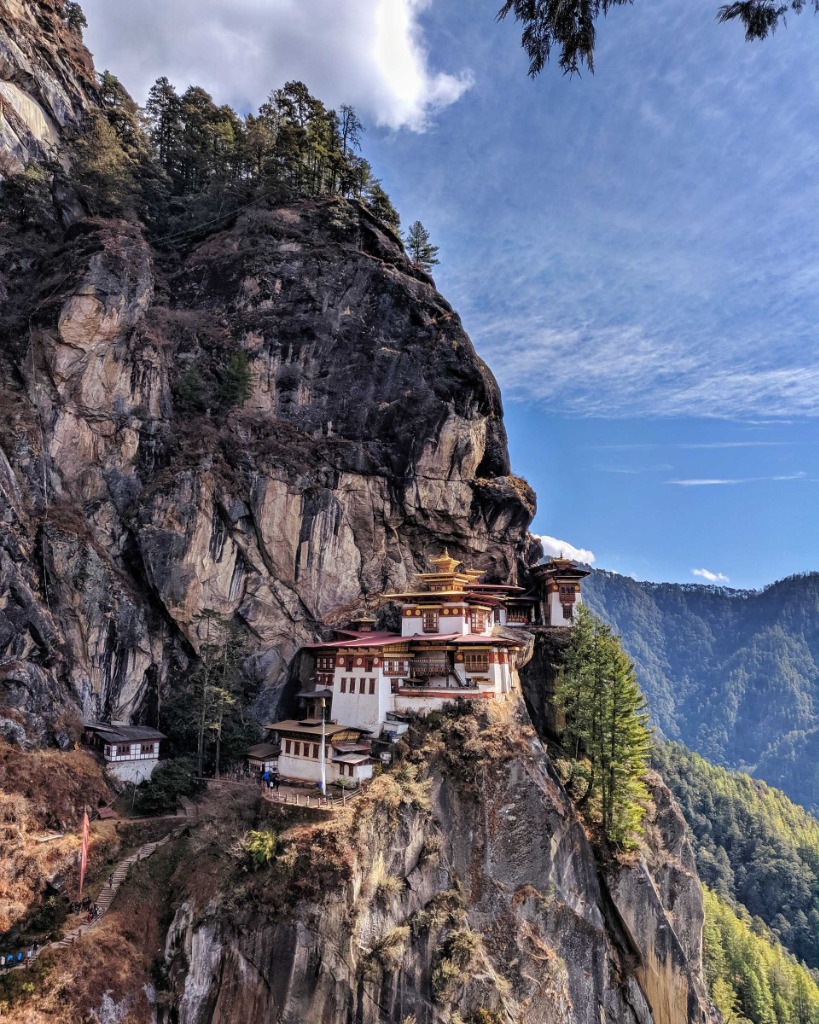
Tiger’s Nest Monastery, locally known as Paro Taktsang, is Bhutan’s most revered and iconic religious site. The monastery is perched dramatically on a sheer cliff approximately 900 meters above the Paro Valley floor, symbolizing devotion, isolation, and spiritual strength. According to Bhutanese legend, Guru Rinpoche (Padmasambhava) flew to this site on the back of a tigress and meditated in a cave here, establishing Buddhism in Bhutan. Today, the monastery remains an active place of worship and pilgrimage. Reaching Tiger’s Nest requires a moderate hike through pine forests and mountain trails, rewarding visitors with breathtaking views and a profound sense of accomplishment and spiritual connection. For many travelers, this visit becomes the most memorable and emotional moment of their Bhutan journey.
Where Happiness is a Way of Life
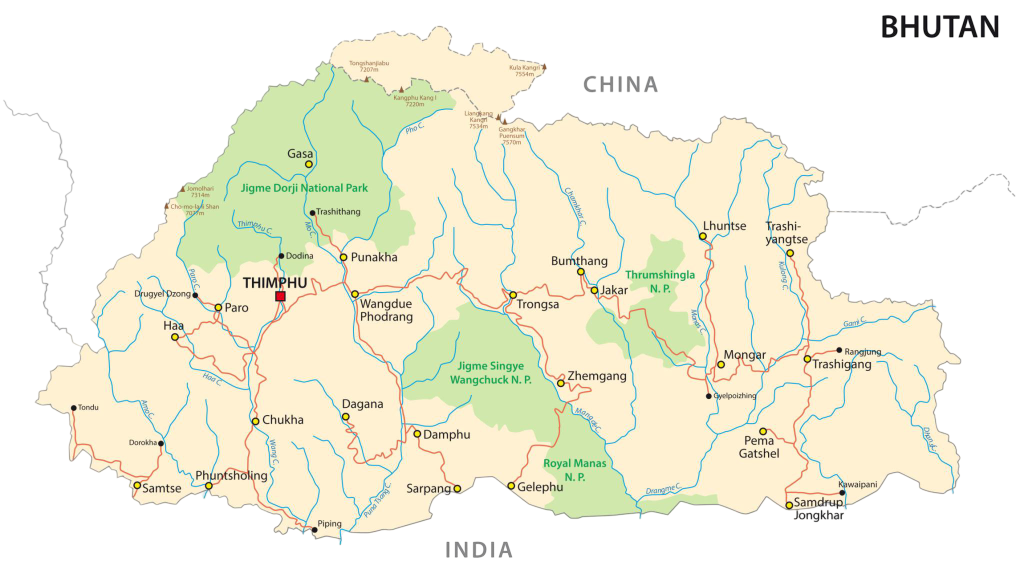
This 5 Nights / 6 Days Bhutan tour is designed to introduce travelers to the heart of Bhutan’s culture, spirituality, governance, and natural beauty. The journey focuses on the western and central regions of Bhutan, which are the most accessible yet culturally significant parts of the country. The tour covers Paro, Thimphu, Punakha, and the scenic mountain corridor via Dochula Pass, concluding with the iconic Tiger’s Nest Monastery. This route offers a complete experience of Bhutan—from ancient monasteries and dzongs to everyday local life, peaceful valleys, and Himalayan landscapes.
📍 Paro – Gateway to Bhutan and Spiritual Foundation
Paro is located in western Bhutan and serves as the country’s primary international gateway. All international flights land at Paro International Airport, which itself is considered one of the most scenic and technically challenging airports in the world due to the surrounding mountains. The Paro Valley is known for its pristine environment, traditional farmhouses, rivers, and sacred religious sites. The town reflects Bhutan’s commitment to preserving tradition while welcoming mindful tourism. Historical landmarks such as Rinpung Dzong, which once served as a defensive fortress and now functions as a monastic and administrative center, highlight Bhutanese architecture and craftsmanship. Nearby, Ta Dzong, originally built as a watchtower, houses the National Museum and preserves centuries of Bhutanese history, art, and artifacts. Paro sets the spiritual and cultural tone for the journey, offering visitors their first deep connection with Bhutanese values, religion, and way of life.
📍 Thimphu – Capital City and Cultural Core
Thimphu lies about 54 kilometers east of Paro and is the political, cultural, and economic center of Bhutan. Unlike most capital cities, Thimphu maintains a calm and traditional atmosphere, with strict building regulations that preserve Bhutanese architectural identity. The city is home to important spiritual and administrative landmarks. The King’s Memorial Chorten is a major religious structure where locals gather daily to pray, meditate, and perform ritual circumambulations. Tashichho Dzong, a massive fortress complex, houses Bhutan’s throne room, government offices, and the central monastic body, symbolizing the unity of religion and governance in Bhutan. Thimphu also offers insight into everyday Bhutanese life through its local markets, textile traditions, and cultural institutions. Visitors gain an understanding of Bhutan’s philosophy of Gross National Happiness, which prioritizes cultural preservation, environmental sustainability, and spiritual well-being over material growth.
📍 Dochula Pass – Gateway Between Regions
Dochula Pass connects Thimphu with Punakha and stands at an elevation of approximately 3,100 meters above sea level. The drive through this pass marks a transition from the cooler highlands to the warmer valleys of central Bhutan. The pass is renowned for the 108 Druk Wangyal Chortens, built to commemorate peace and honor Bhutanese soldiers. On clear days, Dochula Pass offers panoramic views of the eastern Himalayan mountain range, making it one of the most visually striking points of the journey. Beyond its scenic beauty, Dochula Pass represents Bhutan’s deep spiritual symbolism and respect for harmony, peace, and remembrance.
📍 Punakha – Former Capital and Valley of Fertility
Punakha is situated in central-western Bhutan and served as the country’s capital until 1955. Due to its lower elevation, Punakha enjoys a milder climate, fertile land, and lush agricultural landscapes, making it an important farming region. The centerpiece of Punakha is Punakha Dzong, located at the confluence of the Pho Chhu (Male River) and Mo Chhu (Female River). This dzong is not only an architectural masterpiece but also a major religious and ceremonial center, hosting royal weddings, coronations, and annual festivals. The Punakha Valley is characterized by rivers, rice terraces, and traditional villages, offering visitors a peaceful and scenic environment that contrasts beautifully with the higher-altitude regions of Bhutan.
📍 Tiger’s Nest Monastery – Ultimate Spiritual Highlight
Tiger’s Nest Monastery, locally known as Paro Taktsang, is Bhutan’s most revered and iconic religious site. The monastery is perched dramatically on a sheer cliff approximately 900 meters above the Paro Valley floor, symbolizing devotion, isolation, and spiritual strength. According to Bhutanese legend, Guru Rinpoche (Padmasambhava) flew to this site on the back of a tigress and meditated in a cave here, establishing Buddhism in Bhutan. Today, the monastery remains an active place of worship and pilgrimage. Reaching Tiger’s Nest requires a moderate hike through pine forests and mountain trails, rewarding visitors with breathtaking views and a profound sense of accomplishment and spiritual connection. For many travelers, this visit becomes the most memorable and emotional moment of their Bhutan journey.